Beyond baroque
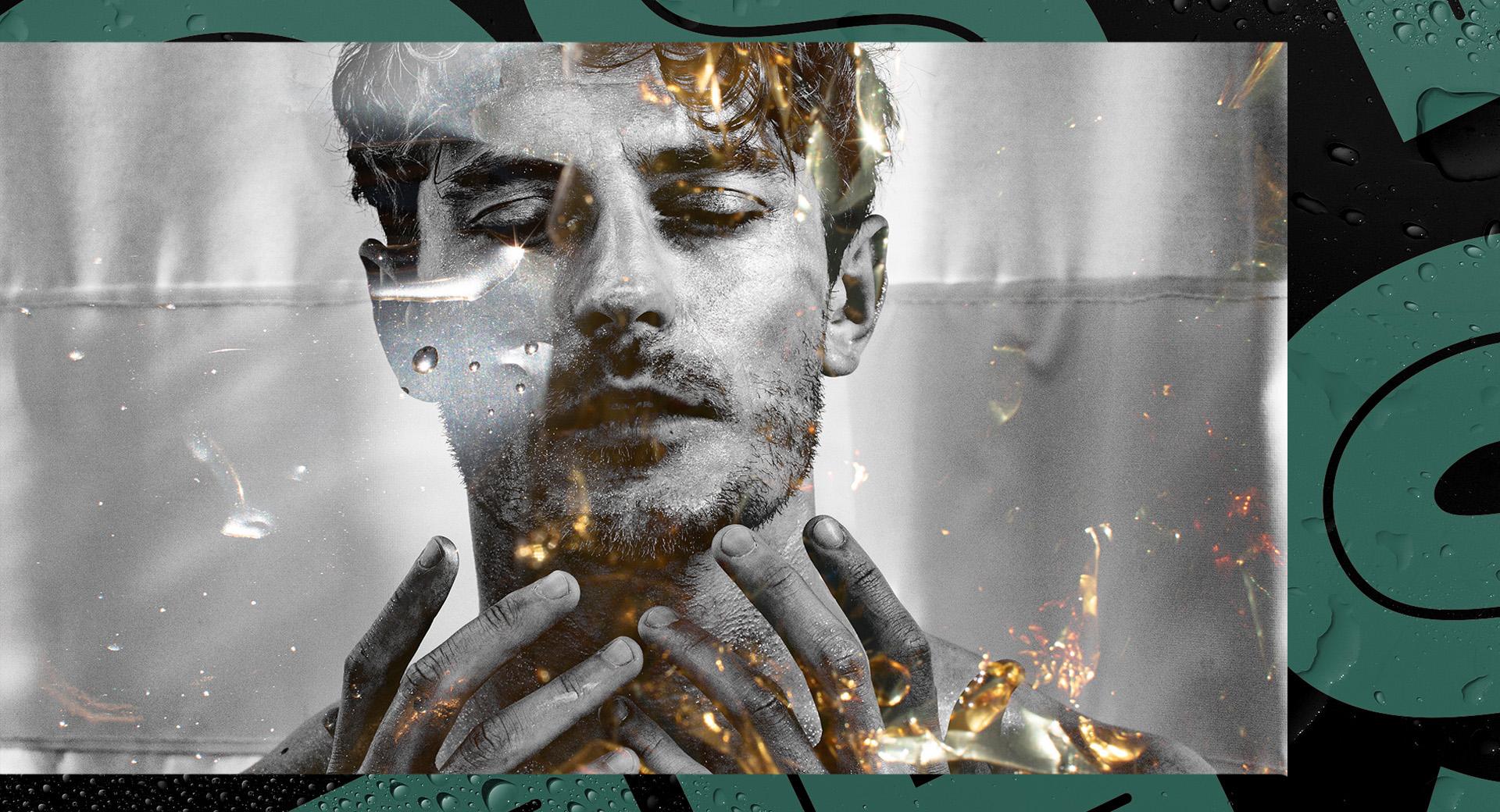
Day four of the Baltic Sea Festival 2026 takes us beyond the boundaries of time. Countertenor Jakub Józef Orliński returns together with the baroque orchestra Il Pomo d’Oro for a program exploring the music of the early Baroque.
Works by Monteverdi, Caccini, and Frescobaldi are combined with newly rediscovered compositions that show how this music reaches beyond its own era and remains relevant today. A concert where history meets the present.
At 6.55 pm, the concert opens with this year's Baltic Sea Day speaker, Charlotte Petri Gornitzka, Governor of Gotland County.
This production is part of one or more concert series.
The concert is broadcast live on P2.
Music that Defies Time
In the history of music, the years around 1600 marked an important watershed. The polyphonic vocal music of the late Renaissance had become so complex that it was almost entirely incomprehensible, both structurally and in terms of textual clarity. To reach the listener’s emotions once again – the affects, as they were called – a new, radical simplicity was needed: almost everything was stripped away apart from the bass line and the melody, which was freed from all contrapuntal ballast and could now float freely and expressively, wholly in the service of words and feeling. From this process emerged the splendour of Baroque music – and European opera.
The Baroque’s New Expression
Jakub Józef Orliński and Il Pomo d’Oro’s musical journey through the seventeenth century begins with the pioneers of the Baroque: Claudio Monteverdi, Giulio Caccini and Girolamo Frescobaldi, who were among the very first to experiment with the new style – ‘music never heard before’, as Monteverdi himself proclaimed. At first, the new idiom was tried out on a smaller scale, for instance in madrigals (short secular vocal works) or stand-alone arias. Caccini’s declaration of love Amarilli, mia bella, from Le nuove musiche, is one of the best known. But soon composers also ventured into large-scale operas. Monteverdi’s L’incoronazione di Poppea is one of the first masterpieces in operatic history, and in the scene E pur io torno qui (And yet I return here), Ottone returns to Poppea’s house in the hope of winning back her love. He soon realises, however, that she has abandoned him for Emperor Nero.
Voglio di vita uscir, by contrast, is an independent solo piece for voice and basso continuo, and is regarded as one of Monteverdi’s most original late vocal works. The title means roughly ‘I want to leave life’ and the piece is a passionate love monologue in which an unhappily enamoured person expresses an almost ecstatic longing for death.
From Girolamo Frescobaldi we hear Così mi disprezzate (So you despise me?), one of the best-known songs from the collection Arie musicali. The text is a love lament with a touch of irony. The spurned lover addresses the beloved.
Francesco Cavalli and Antonio Sartorio – who belong to the great second generation of opera composers – also wrote many significant drammi per musica that have retained their place beyond the Baroque and into our own time. From Cavalli we hear the aria Incomprensibil nume (O incomprehensible deity) from the opera Pompeo Magno, in which Pompey thanks the gods for his victories in Caesar’s presence. From Sartorio’s opera Antonio et Pompeiano we hear the aria La certezza di tua fede, sung by Pompeiano, a military commander. The aria’s title may be translated as ‘The certainty of his faithfulness’ and reflects a theme central to the opera of the period: loyalty, love and human relationships.
Music Still Full of Life
But the concept of Beyond is not only intended to show how vital this music still is; it also moves beyond the art of opera to reveal the full richness of secular Baroque music. Alongside the madrigal and opera, it was dominated by the cantata, which, with its recitatives and arias, resembles opera in structure while still possessing an aesthetic entirely its own. A cantata was usually performed in concert form in private settings, not on an opera stage, and rarely has a dramatic plot. Rather, it offers reflections on life, love and nature. Beyond famous composers such as Monteverdi and Caccini, there is a whole range of relatively unknown, forgotten masters who wrote highly rewarding cantatas, including Barbara Strozzi, one of the foremost female composers of the Baroque. Her L’amante consolato (The Consoled Lover) is a solo piece from the collection Cantate, ariette e duetti Op. 2 and tells of a lover who, after long suffering and searching, has finally found the person he has longed for.
Forgotten Masterpieces
A ‘serenata’ is larger than a cantata, but smaller in scale than an opera. This intermediate form was particularly well suited to the aristocratic courts’ somewhat less important occasions that nevertheless required musical embellishment. The Italian composer Sebastiano Moratelli wrote his serenata La faretra smarrita (The Lost Quiver) around 1691 while serving as Kapellmeister in Düsseldorf, for the entry into the city of the ruler’s future bride. Hardly anything is known about Moratelli’s life, and this serenata is the only surviving work by him that we still have today.
Giovanni Cesare Netti, too, is a somewhat obscure figure. During his lifetime he was highly esteemed as a composer of church music and held several important posts in Naples, but sadly almost all his music has been lost. Two of his operas do survive, however, and in them one can clearly hear why Netti’s contemporaries valued his expressive style so highly that poems were written in its honour. Orliński performs not only a large solo scene from the opera La Filli, but also two arias from his opera L’Adamiro, written in the same year. Both are sung by the elderly nurse Doralba, who laments how hard it is to find love at her age. In a period when tragedy and comedy were freely mixed in opera, figures such as hers were common and popular.
Instrumental Treasures
The programme also includes purely instrumental music. Here we encounter a passacaglia from Biagio Marini’s groundbreaking collection Per ogni sorte di strumento musicale, from Diversi generi di sonate, da chiesa, e da camera (For all sorts of musical instruments, from the collection Various kinds of sonatas, for church and chamber). Published in 1655, the collection gave musicians the freedom to choose the instrumentation themselves – for example violins, cornetts and sackbuts – with basso continuo as its foundation.
Beyond the Alps we meet Johann Caspar von Kerll, represented here by a sonata for two violins in F major. Born in Saxony, he came to build bridges between the musical traditions of Italy and southern Germany. Orliński’s native Poland is represented by Adam Jarzębski, one of the most colourful figures in seventeenth-century Polish musical life. In the course of his turbulent life he served Sigismund III Vasa, who was not only ruler of Sweden but also King of Poland from 1587 to 1632. His dance-like Tamburetta comes from the collection Canzoni e concerti, regarded as one of the most important collections of early Baroque instrumental ensemble music in Central Europe.
Carlo Pallavicino’s Sinfonia from the opera Il Demetrio belongs to the early Venetian operatic tradition. In the seventeenth century, the word sinfonia did not refer to a symphony in the modern sense, but to an instrumental opening piece to an opera. With its contrasting sections – from solemn Grave to lively Presto – the music offers a glimpse into the world in which the classical symphony would eventually be born.
Finally, a concert experience beyond the ordinary can also be promised – but more than that shall not be revealed here.
Text: Holger Schmitt-Hallenberg and Bodil Hasselgren
Read more about this year's festival
The Baltic Sea Festival returns to Stockholm from 21–29 August 2026, filling the city with music that spans the intimate to the monumental. You can look forward to a rich mix of orchestral concerts, chamber music, choral works, jazz explorations, contemporary premieres, and boundary-crossing collaborations.