Beethoven 250: Eroica in FM and on Play
Concertmaster Malin Broman leads the Swedish Radio Symphony Orchestra in Beethoven’s Sinfonia Heroica, one of the portal works in the transition between the 18th century’s strict classicism and the stormy romance. In addition, world artist Peter Mattei makes a guest play with orchestral songs by Wilhelm Stenhammar and Gustav Mahler.
This production is part of one or more concert series.

Due to the corona virus and its consequences, the concerts in Berwaldhallen which will be broadcast live in Swedish Radio P2 during March and April will be performed without an audience in place. This means that the concert will be broadcast with picture on Berwaldhallen Play.
Ludwig van Beethoven put his money where his mouth was. He was a free artist, not bound to the whims of dukes or kings like his older colleagues. In his third symphony from 1804, the revolutionary spirit is palpable. Originally, Beethoven was going to dedicate the symphony to Napoleon, but when he learned that Napoleon had named himself emperor he immediately, raging, changed his mind.
“Now he, too, will trample all over human rights”, a visibly agitated Beethoven supposedly cried, at least according to his friend and pupil Ferdinand Ries, who recounted the story. This happened in May 1804, just a few days after the symphony was finished. Instead of putting Napoleon’s name on the cover, he wrote Sinfonia Eroica – “heroic symphony”.
Beethoven presented in this seminal work a new kind of symphony: longer, more intensive and individualistic and more indomitable – indeed, heroic – than before. In this way, Beethoven was a musical revolutionary and entered the annals of music history as the titan he had become.
Opera singer Peter Mattei hardly needs introducing. He has made lauded performances on stages and in concert halls around the world and is hailed as one of the foremost singers in the world. At this concert, he will perform two orchestral Lieds with romantic and pastoral strokes.
Wilhelm Stenhammar wrote Floris and Blancheflour for solo voice and orchestra, his third Opus, twenty years old in the spring of 1891. Author and literary historian Oscar Levertin’s lyrics are inspired by a popular romantic story from the European Middle Ages. The story tells of prince Floris who saves his beloved, the poor girl Blancheflour, from the Emir of Babylon who has taken her as his slave. The lyrics are melancholic, even in the happier verses, and the elegantly orchestrated music has a bittersweet tone as well.
The collection Des Knaben Wunderhorn, featuring German folk poems and songs, became widely popular across the German-speaking world in the 19th century. Gustav Mahler set several of the texts to music, both as individual songs with piano or orchestral accompaniment, as well as weaving them into some of his symphonies. However, for the song cycle Lieder eines fahrenden Gesellen, songs of a journeyman, he wrote the lyrics himself.
In the second song, Ging heut’ Morgen über’s Feld, the journeyman looks upon the world and asks: “Is it not a fine world?” Those words may not ring as true in times like these as otherwise, but beyond isolation and pandemic, there is – fortunately – still a fine world waiting for us.
Text: David Saulesco and Christina Hedlund
Program change of regular canceled concert (Due to the Government’s decision to limit public events to a maximum of 500 people, the concert has been canceled)
Here you can follow the Swedish Radio Berwaldhallen’s latest updated information about the Corona virus.
More concerts
 7–8 October100 - 420 kr
From cello glow to Slavonic dances — with Gardolinska & Koranyi
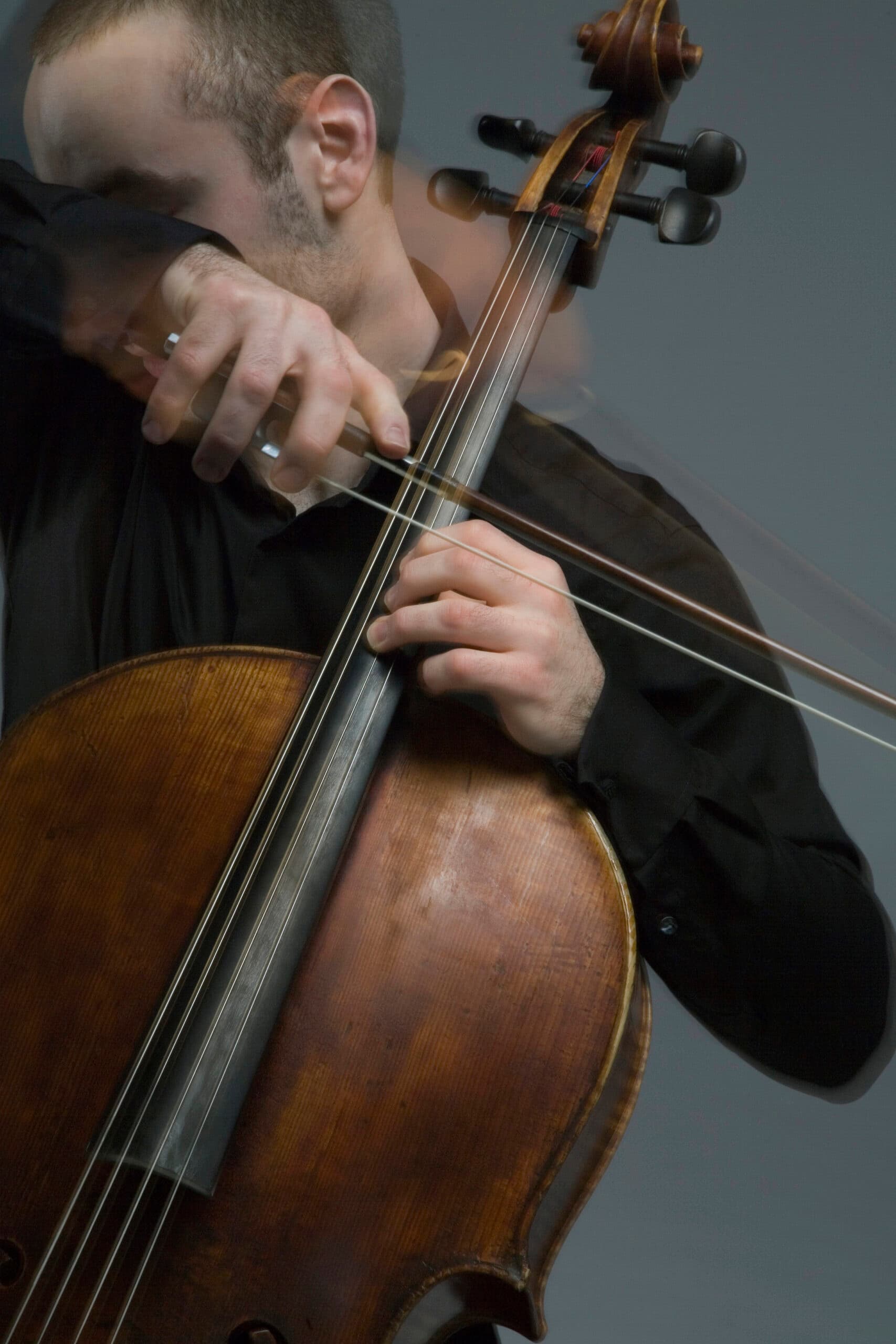
Marta Gardolińska leads the Swedish world-renowned cellist Jakob Koranyi and the Swedish Radio Symphony Orchestra in Camille Saint-Saëns' beloved first cello concerto – a work that combines virtuoso elegance and dramatic heat. 10 October275 kr
Music in memory of — with the Swedish Radio Choir & Dijkstra
In a concert that rests in silence and comfort, Honorary Conductor Peter Dijkstra leads the Swedish Radio Choir through a program created... 15–16 October130 - 475 kr
Mozart, Liszt & Dante’s Inferno — med Adès, Keller & Bota
When Thomas Adès conducts the Swedish Radio Symphony Orchestra, a concert awaits where the large-scale visions of romanticism meet the glow of... 21 October100 - 420 kr
Discover fin-de-siècle ballet
Through the turn of the century ballet music, a world of rhythms, colours and modernist imagination opens, as Anton Holmer makes his debut with the Swedish Radio Symphony Orchestra. Gregor Zubicky guides you through the music created for the iconic Swedish Ballet and Ballets Russes in Paris.