The St. Matthew Passion
Johann Sebastian Bach will forever be known as one of the true giants of music history, and the St. Matthew Passion is one of his most profoundly moving masterpieces. In this performance, we’ll hear baritone Peter Mattei among the other world-famous soloists.
This production is part of one or more concert series.
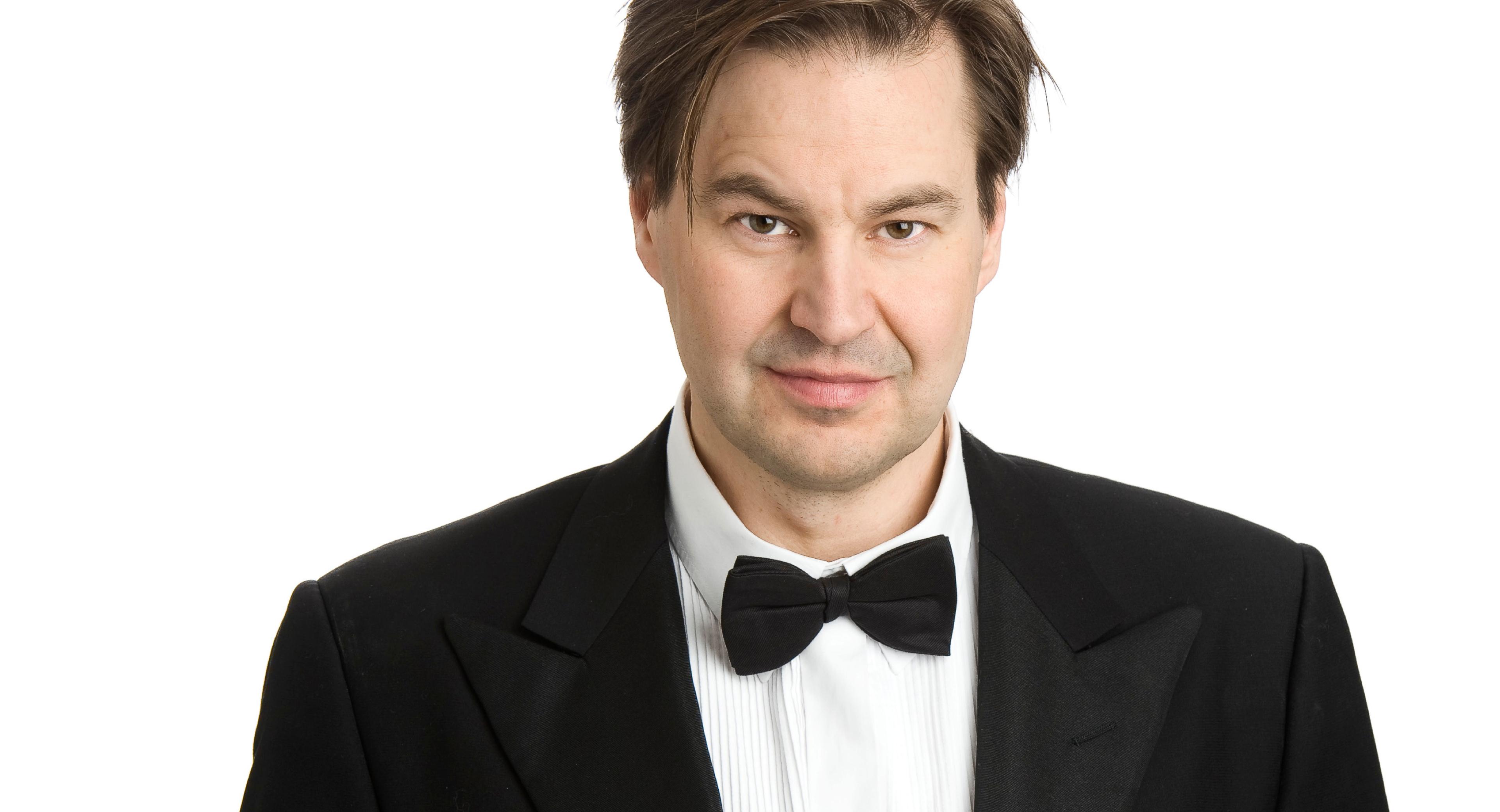
It is unclear how many times Johann Sebastian Bach composed the Passions, the gospel accounts of Jesus’s suffering and death. Unfortunately, only two have been preserved: The St. John’s Passion, premièred in 1724, and the St. Matthew Passion, probably premièred the same year it was written, in 1727. The place was of course the St. Thomas Church in Leipzig, where Bach had been the cantor since 1723.
The St. Matthew Passion is one of music history’s most titanic masterpieces, strongly contributing to Bach’s nickname as “the fifth evangelist” or “God’s musician”. However, such romantic euphemisms do not seem to conform with the composer’s self-image. The Gospel of Matthew is much more comprehensive and detailed in its story of Jesus on the cross than that of John the Evangelist, which is also reflected in the latter’s work. The St. Matthew Passion is on a grander scale, composed for solo voices, double choir and double orchestra. Conveniently, the St. Thomas Church had double organ lofts of different sizes.
The text consists of chapters 26 and 27 in the Gospel according to Matthew of the Lutheran Bible, but there are also glimpses of the Song of Songs. In addition, there are arias and hymns, the latter by various authors and selected by Bach himself. The librettist was Picander, the pseudonym of Christian Friedrich Henrici, with a reputation as a rather minor master. This text is considered his foremost achievement, probably written in close collaboration with the composer. The central figure is the Evangelist who drives the narrative forward, while other song soloists give voice to the various participants of the drama.
Bach’s notes from 1729 about his experience of what had previously been assumed to be the première, indicate certain artistic shortcomings. On Good Friday that same year, there was another Passion, by Gottfried Frober, who was drawing the crowds. Even back then, it was difficult to choose between all the cultural events on offer. Leipzig is also said to have been a conservative city from a musical perspective. A description from 1732 of what is probably Bach’s St. Matthew Passion speaks of tremendous confusion, with comments like “God preserve us, my children! it’s like a comic opera”. Probably not a common reaction today.
In 1829, the celebrated, twenty-year-old Felix Mendelssohn staged a successful revival of the, then rather forgotten, masterpiece in a performance in Berlin. It was the first time the work had been played outside Leipzig and the interest in Bach’s entire oeuvre was instantaneously reignited. A gift to the young Felix Mendelssohn a few years earlier from his grandmother, the score of the St. Matthew Passion, had truly borne fruit!
Text: Gunnar Lanzky-Otto
More concerts

 No tickets left
Mozarts Divertimento with Robilliard, Johnsson and Kiseliov
Runs: 11 novemberTicket price: 175 krMozart’s Divertimento in E-flat major, K. 563, is one of the crowning achievements of Western chamber music. Here, it is performed by...
 Few seats remaining
Music from Vienna — with Harding & Piemontesi
Runs: 12–13 NovemberTicket price: 130 - 475 krVienna's rich musical tradition takes center stage when Daniel Harding conducts the Swedish Radio Symphony Orchestra in a program where the elegance...
Elgar’s Enigma Variations
Runs: 18–19 NovemberTicket price: 100 - 420 krBritish conductor Adam Hickox makes his debut with the Swedish Radio Symphony Orchestra with Edward Elgar’s beloved Enigma Variations, where both friendship and enigma are woven together into one of orchestra music’s most iconic works.
The Order of the Virtues with the Swedish Radio Choir — Doyle conduct’s MacMillan & von Bingen
Runs: 21 NovemberTicket price: 275 krHildegard von Bingen's medieval visions are given new light through James MacMillan's monumental Ordo Virtutum (Order of the Vices) when the Swedish Radio Choir takes to the Berwaldhallen stage together with Justin Doyle and percussionists from the Swedish Radio Symphony Orchestra.