Gidon Kremer & Kremerata Baltica
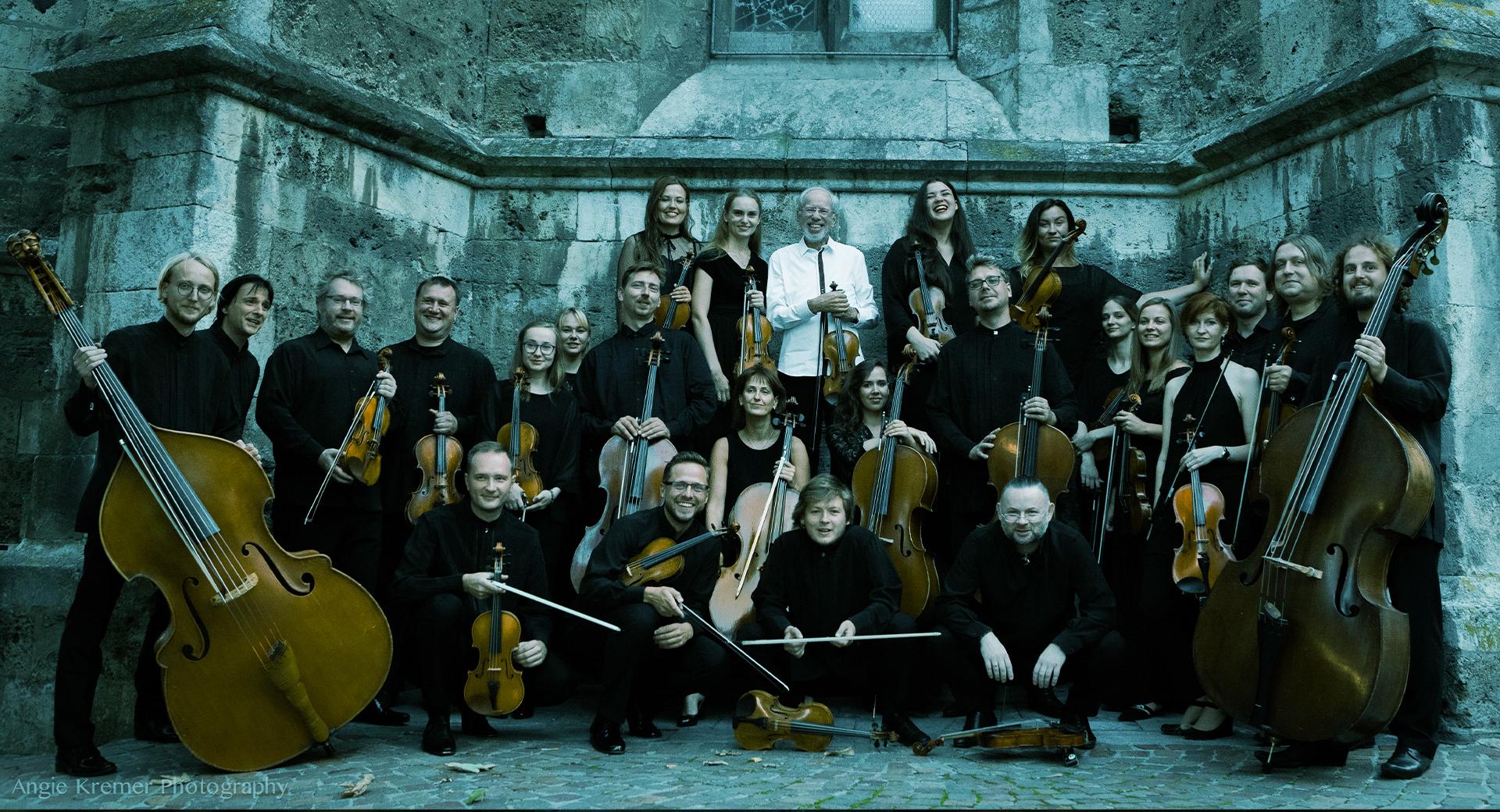
Kremerata Baltica and its leader Gidon Kremer – who has celebrated his 75th birthday – performed at the very first Baltic Sea Festival in 2003. The ensemble celebrates 25 successful years together. They now return for Festival’s 20th anniversary with music by four generations of Baltic and Russian composers in which the highlight is a new orchestral cycle entitled Eine (andere) Winterreise, commissioned especially for the Kremerata Baltica anniversary. It consists of five works by five composers from Latvia, Lithuania and Russia.
This production is part of one or more concert series.
The concert opens with one of the best-known concert pieces of the 20th century – Arvo Pärt’s Fratres. The original version from 1977 was written for optional instrumentation. Pärt and other composers have subsequently written many arrangements and reinterpretations. Pärt wrote the second version himself in 1980 for Gidon Kremer and the pianist Elena Bashkirova. Three years later, the Swedish Radio Symphony Orchestra and Neeme Järvi performed yet another version for string orchestra and percussion. This concert is a version from 1992 in which Pärt has combined the virtuoso solo violin part from the 1980 version with the orchestral movement from 1983. According to Pärt, the combination of frenzy and serenity expresses “the never-ending struggle between the present and eternity”.
The chamber orchestra piece Lignum was written especially for Kremerata Baltica, who premiered it in 2017 at the opening concert of the annual Riga Jurmala Music Festival. Jēkabs Jančevskis describes the work – whose title means “wood” in Latin – as a conversation with trees: “It’s not so much about verbal communication as about wanting to listen, discover and understand. In this work, I reflect on the way the treetops cast their shadows, the way they speak and how they breathe, how they become silent.”
Arturs Maskats composed Pusnakts Rīgā (Midnight in Riga) as a tribute to Jānis and Johanna Lipke, a Latvian couple who saved some forty Jews during the Nazi occupation of Lithuania during World War II. Jānis and Johanna were able to hide them and eventually bring them to safety due to cunning, a great deal of effort and opportunities offered by Jānis’s job. Maskats describes the work as ”a tribute to Jānis and Johanna’s love for each other before it was tested by the atrocities committed during World War II. It is also a tribute to our parents and their parents, their dreams and hopes”. Pusnakts Rīgā is like a violin concerto with Gidon Kremer himself as the soloist. The solo cello part is also prominent in the work, and the strings are supported by a vibraphone. Arturs Maskats evokes a contemplative and enchanting mood. “Riga is my hometown in the world, and midnight there is always a special time,” says the composer.
The cycle of works entitled Eine (andere) Winterreise was commissioned by Gidon Kremer to mark Kremerata Baltica’s 25th anniversary in 2022. The ensemble was founded as a hothouse for talented young musicians from the Baltic States. Their first concert was at Lockenhaus Chamber Music Festival in Austria. Like Gustavo Dudamel and the Simón Bolívar Symphony Orchestra, Kremerata Baltica are renowned for their outstanding, captivating musicianship.
Five composers, all closely connected to Kremerata Baltica and Gidon Kremer, have composed reflections on the songs of Franz Schubert’s classic song cycle Winterreise. Best known among them to the Berwaldhallen audience is probably Raminta Šerkšnytė; her orchestral piece De profundis was performed at last year’s Baltic Sea Festival. Georgijs Osokins is an acclaimed young Latvian pianist and composer. Alexander Raskatov, Victor Kissine and Leonid Desyatnikov are three Russian composers of international renown.
With titles that refer to songs from the Winterreise, the five works form a contemporary answer to Schubert’s almost two-hundred-year-old signature work. But the project also reflects Gidon Kremer’s desire to promote musicians and composers from around the Baltic Sea. Each individual work is linked to form a coherent whole by means of a fragment from Franz Schubert’s Minuet No. 3 from the D.89 collection of ten dances. The cycle premiered in April 2022 and is here performed for the first time in Sweden.
Text: David Saulesco
More concerts

 Few seats remaining
Mozarts Divertimento with Robilliard, Johnsson and Kiseliov
Runs: 11 novemberTicket price: 175 krMozart’s Divertimento in E-flat major, K. 563, is one of the crowning achievements of Western chamber music. Here, it is performed by...
 Few seats remaining
Music from Vienna — with Harding & Piemontesi
Runs: 12–13 NovemberTicket price: 130 - 475 krVienna's rich musical tradition takes center stage when Daniel Harding conducts the Swedish Radio Symphony Orchestra in a program where the elegance...
Elgar’s Enigma Variations
Runs: 18–19 NovemberTicket price: 100 - 420 krBritish conductor Adam Hickox makes his debut with the Swedish Radio Symphony Orchestra with Edward Elgar’s beloved Enigma Variations, where both friendship and enigma are woven together into one of orchestra music’s most iconic works.
The Order of the Virtues with the Swedish Radio Choir — Doyle conduct’s MacMillan & von Bingen
Runs: 21 NovemberTicket price: 275 krHildegard von Bingen's medieval visions are given new light through James MacMillan's monumental Ordo Virtutum (Order of the Vices) when the Swedish Radio Choir takes to the Berwaldhallen stage together with Justin Doyle and percussionists from the Swedish Radio Symphony Orchestra.